

 April 10, 2026
Bunions are one of the most common structural foot conditions, yet many people are unsure what they actually look or feel like—especially in the early stages. A bunion can start subtly, sometimes mistaken for mild swelling or irritation from tight shoes. Over time, however, the deformity becomes more visible and can lead to persistent discomfort.
If you’ve ever wondered ‘what does a bunion look like’ or whether your symptoms could indicate the start of one, understanding the visual and physical signs can help you seek care sooner and protect your long-term foot health.
What Is a Bunion and What Causes It?
A bunion is a structural deformity that develops at the base of the big toe joint. It appears as a bony bump on the inside of the foot where the big toe meets the first metatarsal bone. Bunions are commonly associated with hallux valgus, although there are two other types: dorsal and tailor’s bunions.
To understand what a bunion looks like, it’s important to recognize the underlying structural changes happening inside the joint. As the condition progresses, the first metatarsal bone gradually shifts outward while the big toe begins to angle inward toward the second toe. This misalignment creates the prominent bump commonly associated with bunions.
The bump itself isn’t just extra bone—it’s the visible result of joint misalignment and inflammation around the affected area.
Common Causes and Risk Factors
Several factors can contribute to bunion development.
The most common contributing factors include:
- Structural foot mechanics
- Flat feet or low arches
- Joint hypermobility or ligament laxity
- Certain footwear choices, particularly narrow or tight shoes
- Repetitive pressure on the forefoot
Bunions occur more frequently in women, partly due to footwear styles that place pressure on the toes. However, the underlying cause is typically structural rather than purely footwear-related.
What Does a Bunion Look Like as It Progresses?
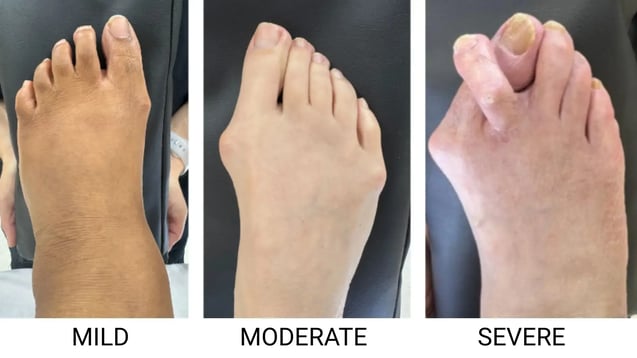
Moderate Bunion Appearance
As the condition advances, the structural changes in the foot become more noticeable. When people search for ‘what does a bunion look like’, they’re often referring to this stage.
The bump on the inside of the foot becomes more pronounced as the big toe gradually shifts toward the second toe. In some cases, the toes may begin to crowd together.
Other visible changes may include:
- Persistent redness or swelling over the bunion
- Thickened skin or calluses caused by friction from shoes
- Corns forming between the first and second toes
- Increased widening of the forefoot
At this point, discomfort may become more frequent, especially when walking or wearing tighter footwear.
Severe Bunion Characteristics
In advanced cases, bunions can significantly alter the shape of the forefoot. The big toe may cross over or under the second toe, creating visible toe overlap.
Severe bunions may also lead to additional foot problems, such as:
- Hammertoes
- Metatarsalgia (pain in the ball of the foot)
- Difficulty fitting into normal footwear
In some patients, bunion arthritis symptoms may develop as the joint becomes inflamed and cartilage wears down. This can lead to stiffness, reduced mobility, and persistent joint pain.
What Does a Bunion Feel Like? Pain and Discomfort Explained
Beyond appearance, bunions can produce a range of physical sensations or symptoms due to inflammation. Many patients describe bunion discomfort as aching or throbbing around the big toe joint, burning sensations, sharp pain during push-off while walking, or stiffness in the joint after periods of rest.
Activities that place pressure on the forefoot—such as walking long distances, standing for extended periods, or wearing narrow shoes—often aggravate symptoms. In some cases, nerve irritation around the bunion may lead to numbness or tingling in the surrounding toes.
When Should You See a Specialist About Your Bunion?
You should seek evaluation if you experience:
- Persistent foot pain that’s affecting daily activities
- Rapid progression of the deformity
- Difficulty finding comfortable shoes
- Increasing redness or swelling
- Limited motion in the big toe joint
Early evaluation allows specialists to recommend treatments that may slow progression and relieve symptoms before the deformity becomes severe.
Why Choose Our Foot and Ankle Specialists
At the Foot & Ankle Center of Arizona, patients receive comprehensive care for the full spectrum of foot and ankle conditions, from early bunion symptoms to complex deformities. The practice is led by board-certified podiatrists and fellowship-trained foot and ankle surgeons known for clinical precision and evidence-based treatment strategies.
If you’re noticing changes in your foot or are concerned you may have a bunion in its early stages, scheduling a consultation can help you understand your options and take proactive steps toward lasting relief.

-optimized.webp)