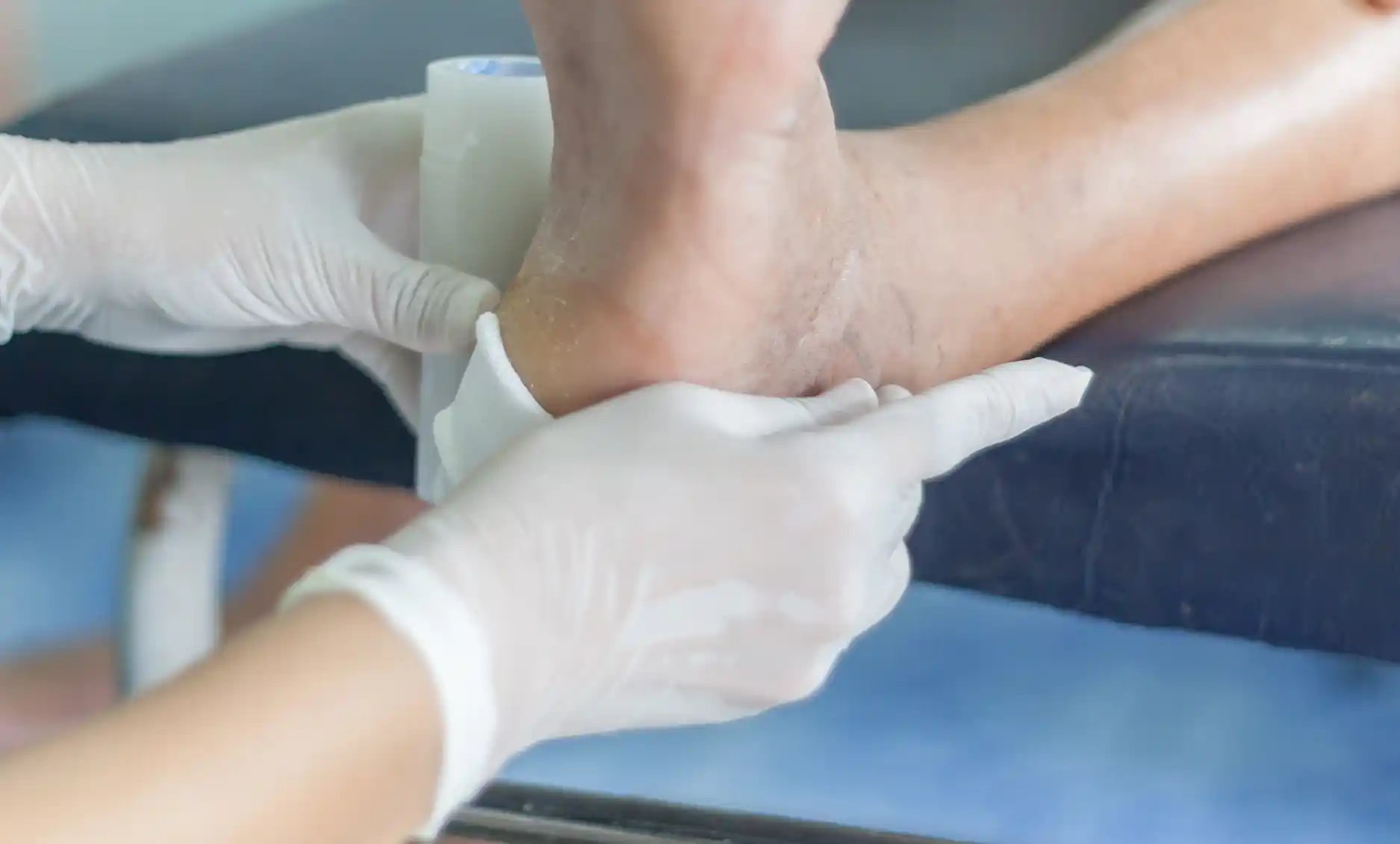
Ulcer & Wound Care
Understanding Ulcers and Wounds
A foot ulcer is an open sore that does not heal properly. These wounds most commonly develop on the bottom (plantar surface) of the foot and are especially common in individuals with diabetes.
Several factors contribute to the development of foot ulcers:
- Peripheral neuropathy (nerve damage) – reduces sensation, so injuries go unnoticed
- Poor circulation – slows healing
- Excess pressure and shear stress – repetitive friction causes skin breakdown
- Foot deformities – bunions, hammertoes, or prominent bones increase pressure points
Research shows that increased plantar shear stress — a sliding force between layers of tissue — also plays a major role in ulcer formation in diabetic patients.
Without early treatment, ulcers can worsen and lead to infection, tissue damage, or even limb-threatening complications.
Other Serious Wound Concerns
Gangrene
Gangrene occurs when tissue dies due to a lack of blood supply, sometimes combined with infection. Individuals with diabetes, vascular disease, or a history of smoking are at increased risk.
There are two primary types:
- Dry gangrene – caused by poor circulation
- Wet gangrene – involves bacterial infection and spreads more rapidly
Gangrene requires urgent medical evaluation.
Puncture Wounds
Puncture wounds — such as stepping on a nail — may appear minor but can hide deep tissue injury. Because the entry point is small, bacteria or debris can become trapped beneath the skin.
Prompt evaluation (ideally within 24 hours) significantly reduces the risk of infection or bone involvement.

Common Causes of Ulcers and Wounds
Foot ulcers and chronic wounds typically develop due to:
- Diabetes and peripheral neuropathy
- Poor circulation (peripheral arterial disease)
- Excessive pressure or friction
- Foot deformities
- Previous ulcer history
- Trauma or puncture injuries
- Tobacco use
- Burns or frostbite
Many wounds fail to heal because blood flow is insufficient to deliver oxygen and nutrients to the affected area. Identifying and correcting the underlying cause is key to successful treatment.
Symptoms to Watch For
You should seek immediate evaluation if you notice:
- An open sore that isn’t healing
- Drainage or foul odor
- Redness, warmth, or swelling
- Skin discoloration (blue, purple, black, or pale areas)
- Increasing pain — or sudden numbness
- Fever or feeling unwell
- Blisters or spreading skin breakdown
Early intervention dramatically reduces the risk of infection, hospitalization, or amputation
How We Diagnose Ulcers and Wounds
At the Foot & Ankle Center of Arizona, we perform a comprehensive wound evaluation to determine severity and underlying causes.
Your assessment may include:
- Detailed physical examination
- Measurement of wound depth and size
- Evaluation of circulation and nerve function
- X-rays to rule out retained foreign objects or bone infection (osteomyelitis)
- Advanced imaging if deeper infection is suspected
- Laboratory testing, if needed
For puncture wounds, we carefully assess the depth, the object involved, and whether debris, fabric, or foreign material may remain in the wound.
For suspected gangrene, we evaluate tissue viability and blood supply immediately.
Prompt, thorough diagnosis allows us to begin targeted treatment without delay.
Ulcer & Chronic Wound Care: Treatment Options
Treatment depends on the type, severity, and underlying cause of the wound. Our approach focuses on healing, infection control, and preventing recurrence.
Conservative & Non-Surgical Treatment
- Advanced wound dressings
- Offloading (special footwear, boots, or padding to relieve pressure)
- Custom orthotics
- Debridement (removal of dead tissue)
- Antibiotic therapy when infection is present
- Wound cleaning and monitoring
- Diabetic foot management
Offloading is especially critical in the treatment of diabetic ulcers. Reducing pressure allows the tissue to heal properly.
For puncture wounds, we:
- Perform thorough cleaning
- Remove any foreign bodies
- Order imaging if needed
- Monitor closely during healing
Advanced & Surgical Care
If conservative treatment is insufficient or infection becomes severe, surgical care may be necessary.
Advanced options may include:
- Surgical debridement
- Abscess drainage
- Procedures to restore blood flow
- Correction of deformities causing pressure
- Limb preservation procedures
- Partial amputation (only when absolutely necessary to stop life-threatening infection)
Our fellowship-trained surgeons specialize in limb salvage techniques and work aggressively to preserve as much healthy tissue as possible.
Don’t Wait — Early Care Prevents Serious Complications
If you have diabetes or circulation concerns, even a small wound can escalate quickly. The sooner treatment begins, the better the outcome.
If you notice a foot sore, puncture wound, or signs of infection, schedule an evaluation with our team immediately.
We’re here to help you heal safely and confidently.