
 April 3, 2026
Heel pain from plantar fasciitis can be stubborn, especially when treatment methods don’t seem to help. If you’ve been dealing with ongoing discomfort, you may have come across shockwave therapy for plantar fasciitis, also known as extracorporeal shock wave therapy (ESWT). But does it really work?
For many patients with chronic symptoms, ESWT offers a non-invasive option designed to stimulate healing and reduce pain without surgery or lengthy downtime. At the Foot & Ankle Center of Arizona, our board-certified foot and ankle specialists use advanced treatments like ESWT to help patients find relief and get back to moving comfortably.
What Is Shockwave Therapy (ESWT) for Plantar Fasciitis?
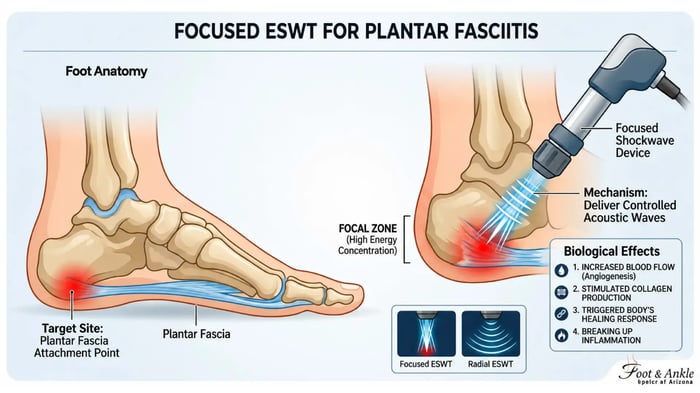
Extracorporeal shock wave therapy delivers controlled sound waves to the thick band of tissue that supports the arch of your foot and connects your heel to your toes, known as the plantar fascia.
These sound waves help:
- Increase blood flow to the affected area
- Stimulate collagen production
- Trigger the body’s healing response
- Break up inflammation
Types of Shock Wave Therapy: Focused vs. Radial
There are two types of extracorporeal shock wave therapy for plantar fasciitis:
- Focused ESWT, which delivers energy to a precise area
- Radial pressure wave therapy, which spreads over a broader surface area
For plantar fasciitis, providers usually prefer focused shockwave therapy because it can more accurately target the attachment site of the plantar fascia to the heel. Since ESWT is non-invasive, it can be considered as an alternative to injections or surgery for patients with persistent symptoms.
Does Shockwave Therapy Work for Plantar Fasciitis?
Clinical research supports the use of shockwave therapy for plantar fasciitis, particularly in patients with long-standing or treatment-resistant pain.
Studies have shown that ESWT for plantar fasciitis can significantly reduce heel pain and improve foot function, especially when other conservative treatments haven’t provided relief. While results can vary, many patients notice improvement within weeks of completing treatment.
Which Patients Respond Best to ESWT
Shockwave treatment for plantar fasciitis tends to be most effective for patients who:
- Have had plantar fasciitis symptoms for several months or longer
- Have not responded to rest, stretching, orthotics, or other treatments
- Experience localized heel pain in the plantar fascia
It’s important to set realistic expectations. Relief is often gradual rather than immediate. Patients should know that factors such as symptom duration and severity can all influence outcomes.
What Does the ESWT Treatment Process Involve?
Before starting ESWT, your provider will conduct an initial evaluation to confirm your diagnosis and determine whether shockwave therapy is appropriate.
This may include:
- A physical exam to assess pain location and foot mechanics
- A review of your symptoms and treatment history
- Imaging, such as X-rays or ultrasound
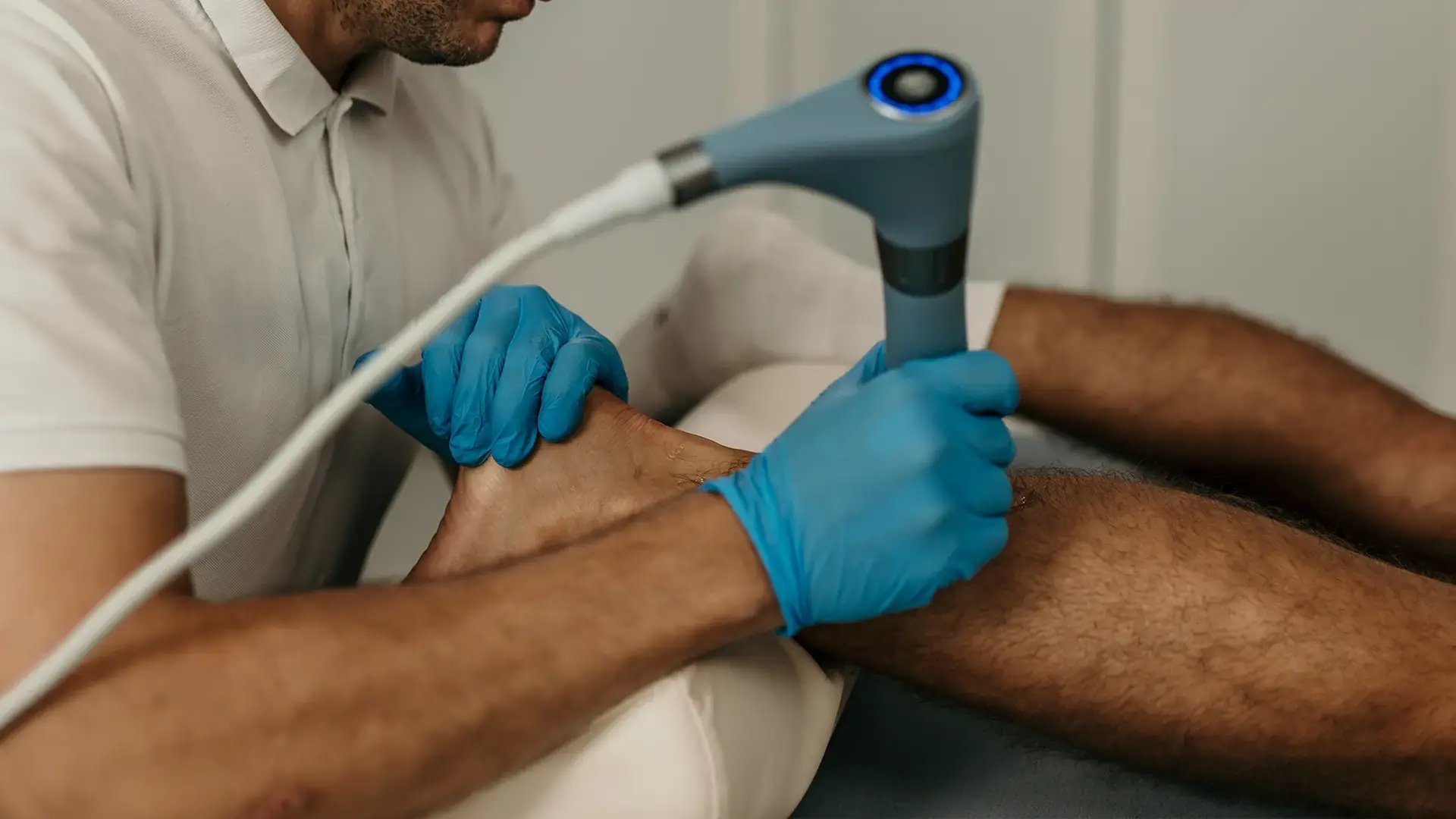
A typical shockwave therapy session for plantar fasciitis is performed in the office and usually takes about 15 to 20 minutes.
During treatment, a handheld device delivers controlled acoustic waves to the heel. Your provider can adjust the intensity based on your comfort level. You may feel mild pressure or pain during the treatment session.
Many patients ask, how many sessions of shockwave therapy for plantar fasciitis are needed? In most cases, treatment involves a series of 3 to 5 sessions, spaced about one week apart.
Who Is a Good Candidate for ESWT Treatment?
You may be a strong candidate for ESWT if you:
- Have chronic plantar fasciitis that hasn’t improved with conservative care
- Want to avoid injections or surgery
- Are looking for a non-invasive treatment option with minimal downtime
Conditions That May Affect Eligibility
Certain factors may affect whether your provider recommends ESWT, including:
- Specific medical conditions that affect healing
- Nerve disorders or circulation issues
- Pregnancy
Get Expert Shockwave Therapy for Plantar Fasciitis in Scottsdale
Persistent heel pain doesn’t have to become your new normal. Advanced treatments like extracorporeal shock wave therapy for plantar fasciitis may offer a path forward.
Board-certified foot and ankle specialists at the Foot & Ankle Center of Arizona provide personalized care using the latest non-surgical treatment options, including ESWT. Each patient receives a comprehensive evaluation and a treatment plan tailored to their condition, lifestyle, and goals.
If plantar fasciitis is still slowing you down, a targeted, non-invasive option like shockwave therapy could help you turn the corner. Start with a consultation to see what approach makes the most sense for your feet.

-optimized.webp)