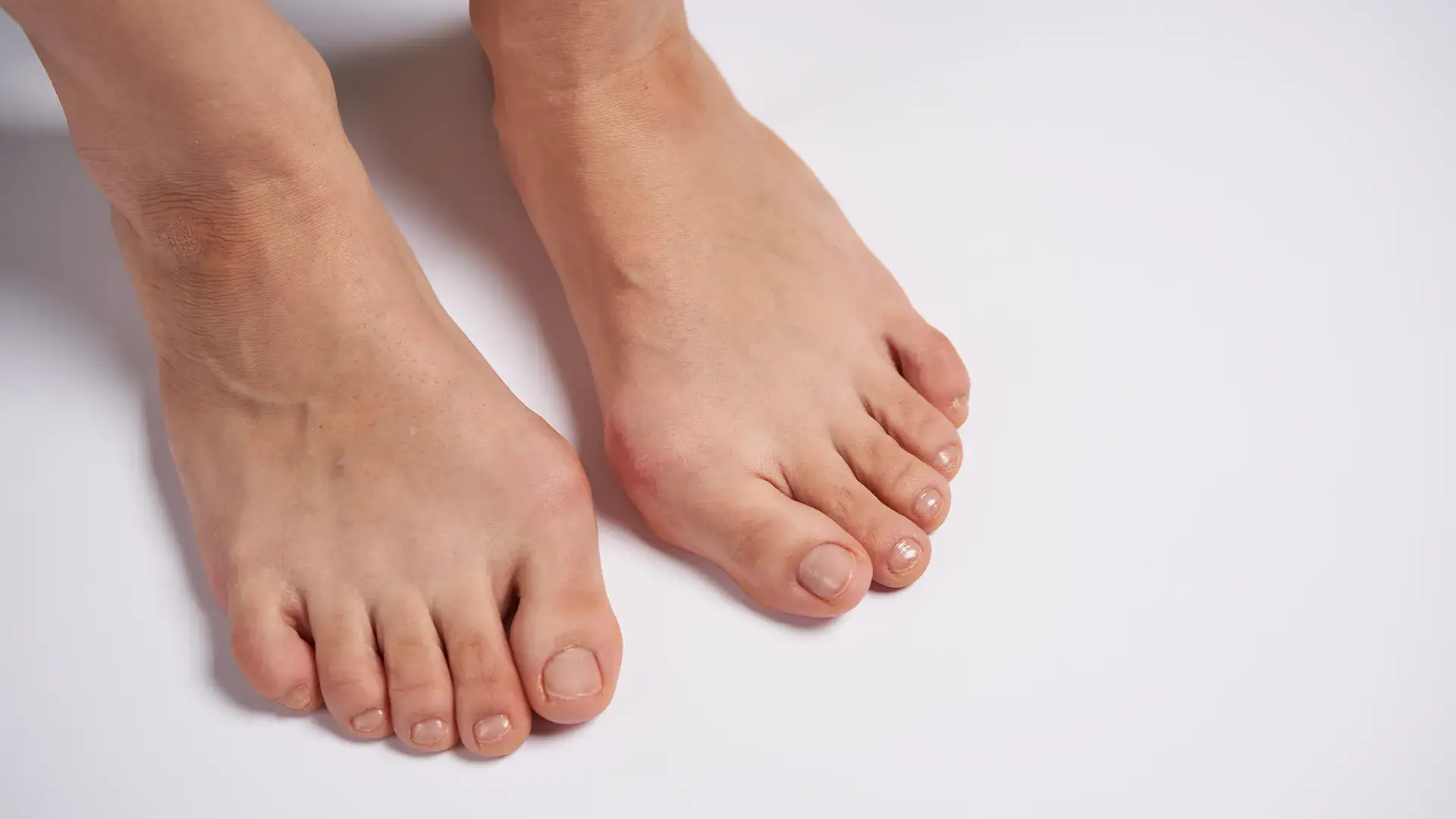
Bunions don’t appear overnight. They tend to develop slowly, often starting as a mild shift in the big toe that’s easy to ignore, until discomfort, shoe irritation, or daily pain makes them harder to overlook.
Many people come to us wondering: At what point does a bunion require more than simple at-home care? Paying attention to symptoms and acting at the right moment puts you in a better position to protect your long-term foot health.
What Is a Bunion?
A bunion, or hallux valgus, forms when the big toe gradually drifts toward the second toe, eventually leading to a bony growth at the base of the toe joint.
Bunions are not simply a bump—they represent a change in how the bones, ligaments, and tendons of the big toe function together. Without proper management, they can worsen over time because the improper positioning continues with every step.
Common bunion symptoms include:
- Pain, numbness, or tenderness at the base of the toe
- Swelling or redness around the big toe joint
- Stiffness or limited big toe motion
- Thickened skin (known as corns or calluses)
- Difficulty wearing certain shoes
- Changes in walking pattern or balance
Early and Conservative Treatment Options for Bunions
In the early stages, bunion treatment options typically focus on reducing irritation and slowing bunion advancement.
Non-surgical bunion treatments may include:
- Wearing wider, supportive footwear to relieve pressure
- Using custom orthotics or padding to improve alignment and comfort
- Modifying activities that aggravate the toe joint
- Taking anti-inflammatory medicines (NSAIDs) to help with pain and swelling
When Is Bunion Surgery Considered?
Bunion surgery is considered when other treatments fail to relieve symptoms. During a consultation with a podiatrist, they’ll evaluate:
- Severity of bunion compared with your pain level
- Whether non-surgical treatments have helped
- Imaging results that show joint misalignment
- How the bunion affects mobility and lifestyle
- Personal expectations for recovery
The decision for surgery is highly personal. Some patients live comfortably with bunions for years, while others benefit from earlier correction to prevent worsening damage.
Types of Bunion Surgery
All surgical plans are tailored to the patient’s anatomy and symptoms. Some of the procedures available include:
Osteotomy Procedures
This surgery, also referred to as a bunionectomy, involves carefully cutting and realigning the bone. It’s used when a high level of structural correction is required. The surgeon will use small fixation devices such as pins, rods, or screws to stabilize the bone.
Soft Tissue Procedures
In select cases, soft-tissue surgery can help rebalance or relieve pressure on tendons and ligaments. It can also be combined with other techniques for more severe bunions.
Advanced or Corrective Bunion Surgery
For longstanding or recurrent bunions, advanced or corrective surgery, such as our groundbreaking Bunionplasty® procedure, may also be an option. This type of surgery is highly customized to the patient and their foot anatomy.
Unlike traditional bunionectomy procedures, which often require larger incisions and extended recovery time, Bunionplasty® is a minimally invasive bunion surgery that corrects the deformity through small, precise incisions and advanced fixation techniques.
The preferred technique by Dr. Kris A. DiNucci—a nationally recognized leader in minimally invasive bunion surgery and a long-standing Phoenix Top Doc—this procedure focuses on restoring alignment while minimizing soft-tissue disruption. For patients, this approach usually means less post-operative pain, reduced swelling, smaller scars, and a faster return to normal footwear and activity compared to traditional bunion surgery approaches.
Performed for a number of years and advanced by FACA founder Dr. Kris DiNucci, Bunionplasty is now offered across the practice, including by Dr. Bishop and Dr. Varney.
Benefits of Bunion Surgery
When appropriately recommended by a podiatrist, bunion surgery can provide:
- Long-term relief from chronic bunion pain
- Improved foot alignment
- Greater mobility
- Easier footwear choices and comfort
- Reduced risk for progressive joint damage
Risks and Recovery Considerations
As with any procedure, recovery requires patience and guidance. After surgery, patients can expect:
- Temporary swelling and discomfort
- A healing period with activity modifications
- Gradual return to walking and regular footwear
- Rehabilitation exercises to restore strength and mobility
Patients are never left to navigate these challenges alone. Your team will manage any potential risks through proper planning, surgical precision, and structured follow-up care.
Surgery vs. Continued Conservative Treatment
Not every bunion needs surgery, even painful ones. Some patients continue to do well with non-surgical care, depending on their:
- Activity level and lifestyle needs
- Overall health and healing capacity
- Severity and bunion progression
- Personal comfort
Surgery addresses the structural cause, while conservative care focuses on symptom management. Choosing between them should always be a collaborative decision.
Expert Care for Foot and Ankle Conditions
Bunion pain treatment is most effective when it’s tailored, never rushed. An evaluation at The Foot and Ankle Center of Arizona looks not only at the bunion itself, but also at how your foot functions as a whole—your gait, joints, activity level, and footwear demands—all of which influence the best course of care for you.
If you’ve got a bunion you’re concerned about, don’t delay the care you need. Schedule a consultation to find out whether Bunionplasty® or another approach is right for you.

 February 20, 2026

-optimized.webp)