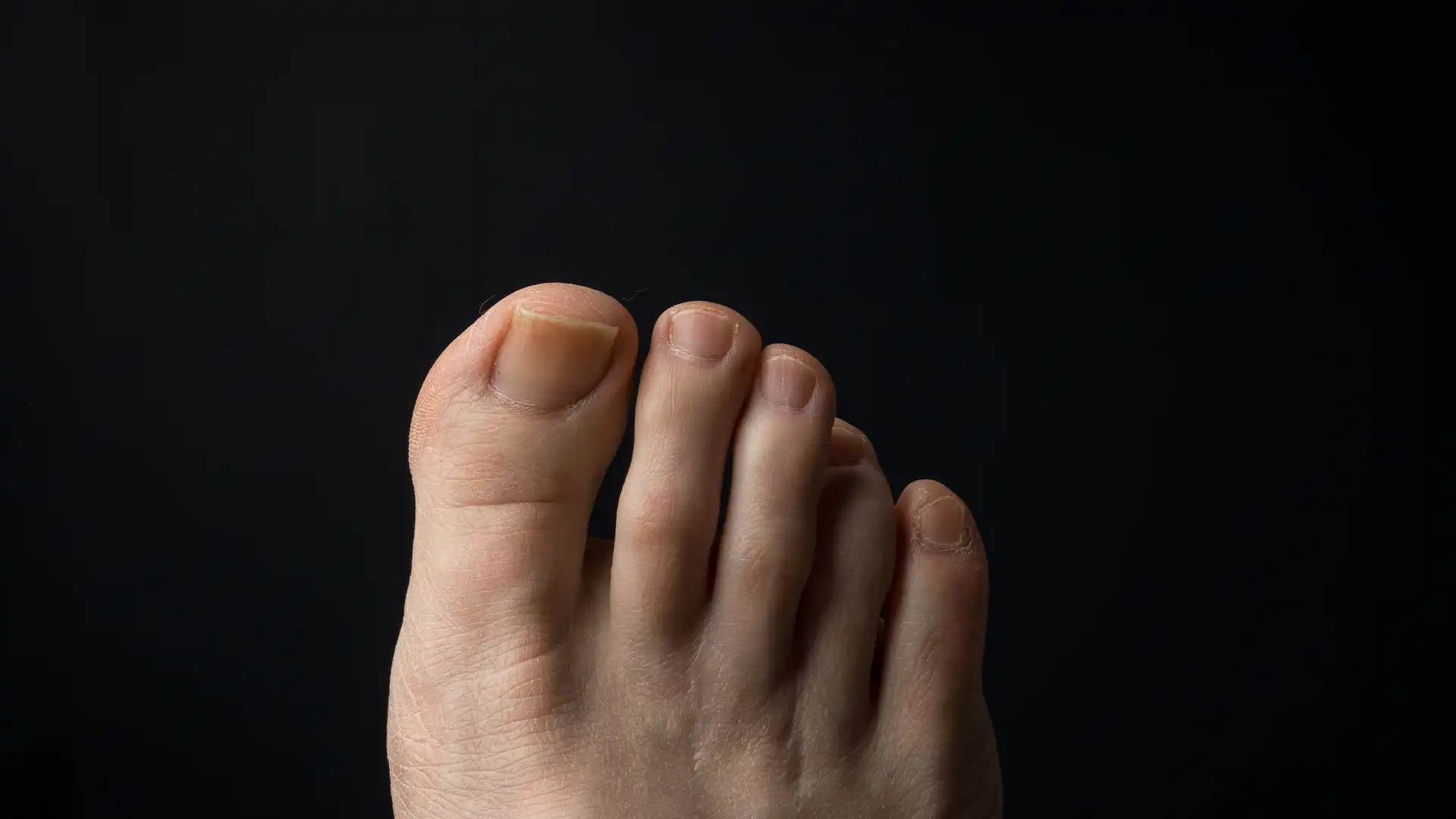
If you've noticed a burning, tingling, or "bunched-up sock" sensation in the ball of your foot — especially between your third and fourth toes — you may be dealing with a condition called Morton's neuroma. It's one of the more common sources of forefoot pain sources of forefoot pain we see at Foot & Ankle Center of Arizona, and one that patients often live with far longer than they need to, assuming it's simply their shoes or their feet "just being tired."
Our board-certified podiatrists and fellowship-trained foot and ankle surgeons evaluate this condition regularly, and that experience matters: Morton's neuroma can mimic other sources of forefoot pain, and an accurate diagnosis is the difference between guessing at shoe changes and getting a treatment plan that actually addresses the source of your discomfort.
What Is Morton's Neuroma?
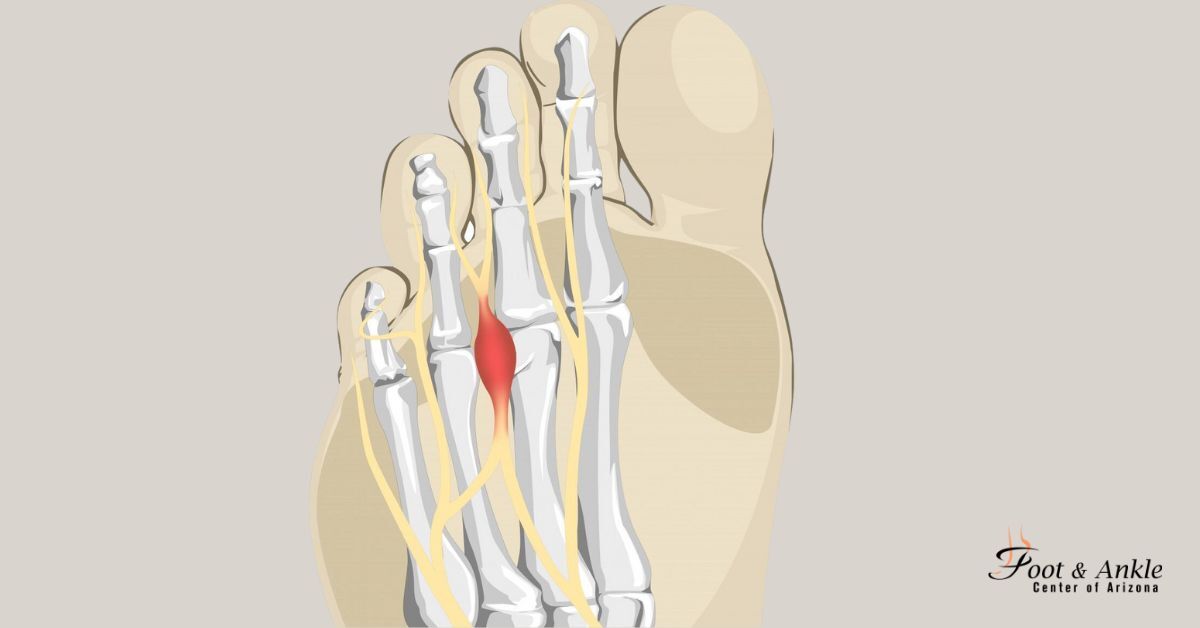
Morton's neuroma is a thickening of tissue around one of the nerves leading to your toes, most often the nerve between the third and fourth metatarsal bones. Despite the name, it isn't a tumor — it's the result of irritation and compression that causes the nerve tissue to thicken over time. That thickened nerve becomes more sensitive to pressure, which is why symptoms often flare with certain shoes or activities and ease with rest.
Morton's Neuroma Symptoms: What Does It Actually Feel Like?
Morton’s neuroma symptoms vary from person to person, but patients commonly describe:
- A burning or sharp pain in the ball of the foot
- A sensation of a pebble or bunched sock inside the shoe
- Numbness or tingling that radiates into the toes
- Pain that intensifies with tight shoes or high heels and improves when barefoot
- Occasional swelling between the toes
What Causes Morton's Neuroma? Risk Factors to Know
Morton's neuroma develops from repeated pressure or irritation to the nerve. The most common contributing factors of this include:
- Wearing narrow, tight, or high-heeled shoes
- High-impact activities like running or court sports
- Foot structure issues, including flat feet or high arches
- Bunions or hammertoes that alter forefoot mechanics
- Repetitive stress from occupations requiring prolonged standing
Morton's Neuroma Treatment at Foot & Ankle Center of Arizona
Most patients respond well to conservative care, and that's always our starting point.
Initial treatment options for Morton’s neuroma may include:
- Shoe modifications, including wider toe boxes and lower heels
- Custom orthotics to redistribute pressure away from the nerve
- Padding or metatarsal supports to relieve compression
- Anti-inflammatory approaches to manage discomfort
- Corticosteroid or alcohol sclerosing injections for persistent cases
When conservative measures don't provide lasting relief, however, our board-certified podiatrists and fellowship-trained foot and ankle surgeons can evaluate whether a minimally invasive surgical release or nerve excision is appropriate. Surgery is reserved for cases that don't respond to non-surgical care, and any recommendation is based on a full evaluation of your specific foot structure and symptoms.
Frequently Asked Questions About Morton's Neuroma
Can Morton's Neuroma Go Away on Its Own?
Mild cases can improve with shoe changes and reduced pressure on the forefoot, but the thickened nerve tissue typically doesn't resolve without some form of treatment. Early intervention gives you the best chance of avoiding more invasive options later.
Is Morton's Neuroma Serious?
It isn't dangerous, but it's rarely something to ignore. Left untreated, the irritation can worsen and make walking or standing increasingly uncomfortable. A timely evaluation helps identify the most conservative path forward.
How Is Morton's Neuroma Diagnosed?
A physical exam combined with a review of your symptoms and footwear habits is often enough for diagnosis. Imaging, such as ultrasound, may be used to confirm the diagnosis or rule out other causes of forefoot pain.
Ready for Answers? See a Morton’s Neuroma Specialist in Scottsdale, Gilbert, Peoria, or Phoenix
You don't have to live with burning, tingling forefoot pain or work around it with different shoes forever. With locations in Phoenix, North Scottsdale, Gilbert, and Peoria, our board-certified podiatrists and fellowship-trained foot and ankle surgeons can pinpoint the cause of your discomfort and guide you toward the treatment that fits your lifestyle.
Schedule an evaluation today and take the first step toward pain-free movement.
 July 31, 2026

-optimized.webp)